
Moving
Where are you heading? To the future

Directed by Shinji Sōmai
Japan 1993
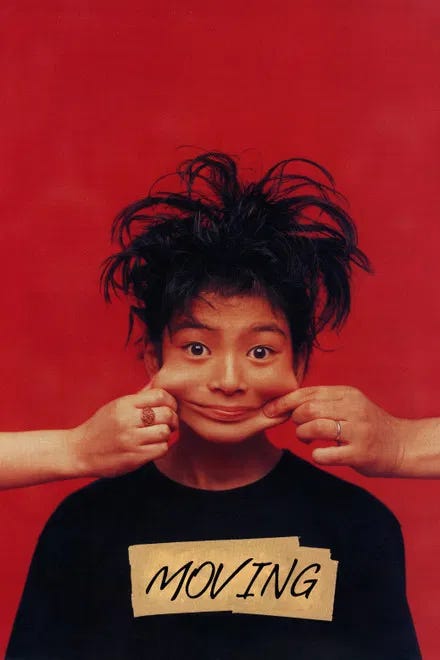
‘Coming-of-age story’ is really quite a catch-all term for describing a work of fiction, and can be attributed to everything from the Harry Potter books to Danny Boyle’s 28 Years Later. This often means that it tells us very little about the work itself beyond simply, ‘young person learns stuff about the world’. So, when first hearing Shinji Sōmai’s Moving described as a coming of age drama, there was apprehension among the ReidsonFilm cohort, concerned by the minefield of tired themes and tropes often associated with films labelled as such. We were, however, delighted to discover that Moving defies this apprehension entirely, somehow managing to both embody the essence of the genre while at the same time being a very unconventional and unique portrayal of a child navigating the chaos of familial separation.
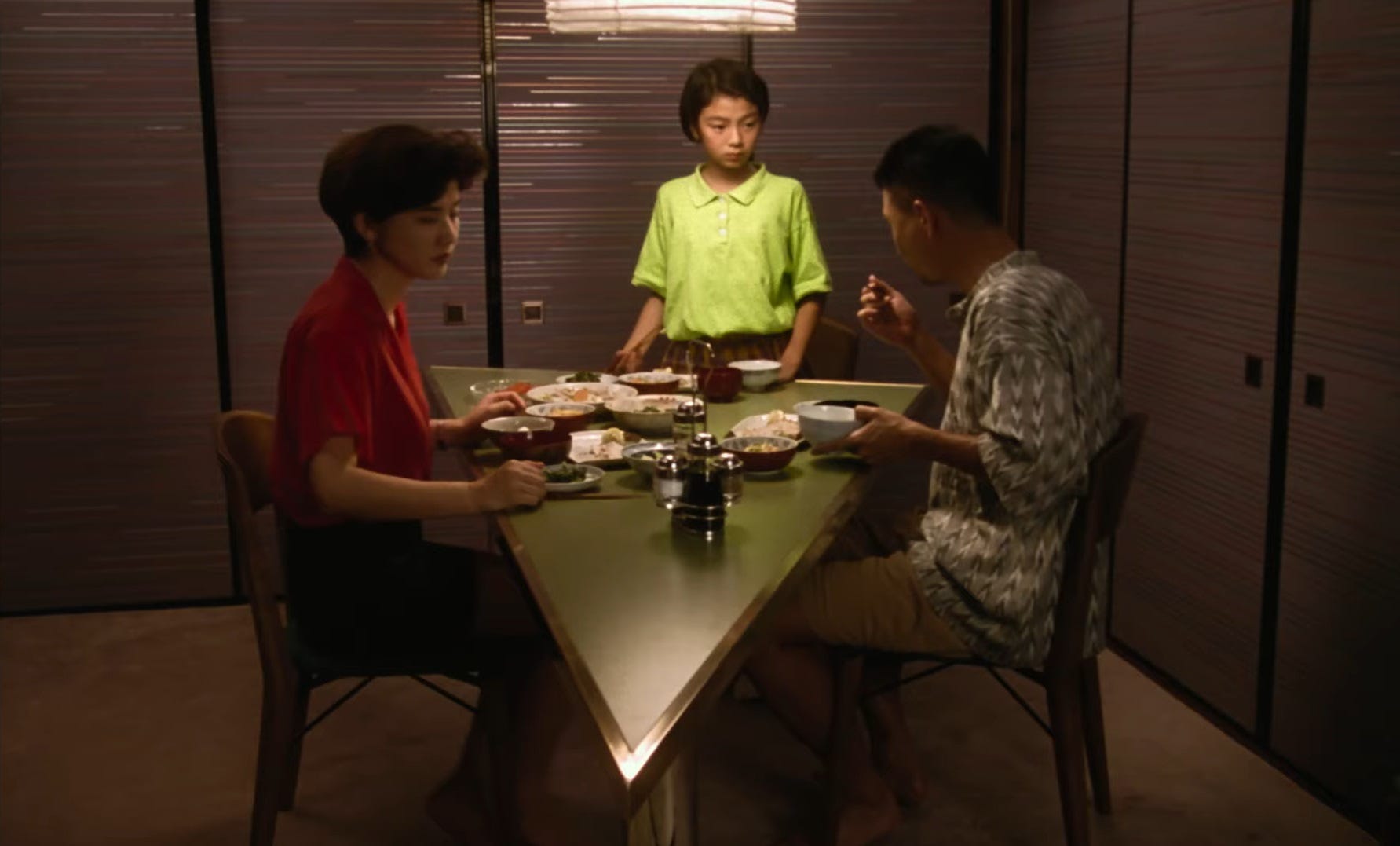
Moving is set predominantly in the suburbs of Kyoto, which already sets it apart from most Japanese films that make it to a Western audience - usually taking place either in rural (often feudal) Japan or the urban sprawl of Tokyo. The film opens with a family dinner, and we find out that Kenichi Urishaba (Kiichi Nakai) , the father of young female protagonist, Ren (Tomoko Tabata), is in fact moving away. As the opening scenes unfold it becomes clear that this move is in fact a marital separation from Ren’s mother, Nazuna (Junko Sakurada), but all parties are keen to stress that it is not a divorce.
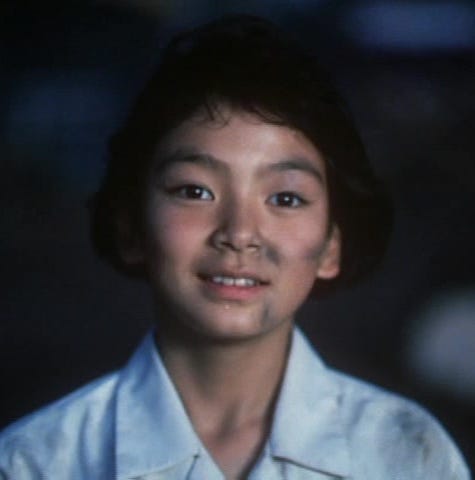
Ren is a fairly mature, precocious child, and at first she seems to be largely at ease with the change. Not so for her parents, however, who both seem childish in their own ways and clearly have a propensity to neglect Ren, particularly when alcohol is involved. The film plays on this childlike-parent/parentlike-child relationship dynamic throughout, and with the neglectful parents and brightly coloured t-shirts Ren wears, you can’t help but recall the iconic moment in Miyazaki’s Spirited Away where Chihiro’s parents sit down for a mysterious meat buffet, completely ignoring Chihiro’s warnings and face quite severe consequences for doing so.

I also saw similarities with Miyazaki: the dream-like fantasy elements and it being a coming-of-age story that really observes the world with a child’s curiosity - N
Despite her maturity, Ren’s grip on the situation slowly starts to loosen - partly because her parents are nowhere to be seen. Ren is left to her own devices, roaming the suburbs with other kids whose divorced parents have let them loose, she also starts to act up in school, starting fights and setting things on fire. Ren must go on a journey of discovery, trying to save her parent’s relationship, which turns out to be more difficult than The Parent Trap would have us believe, and may simply be forced to come to terms with the fractured reality that she now faces.
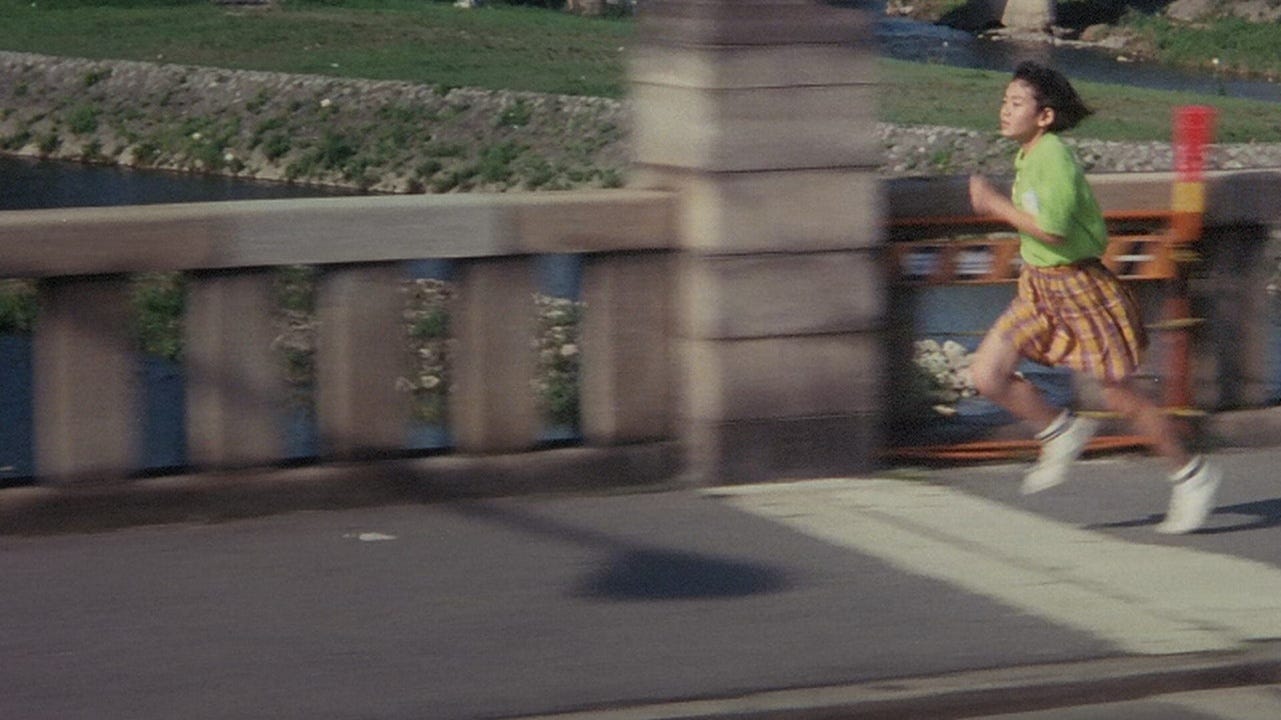
While there is nothing particularly complex about the storyline, where Moving really comes into its own is the playful, expressive style of Shinji Sōmai’s directing. He uses blocking and camera position to great effect within the film to accentuate character relationships, Ren often taking the ‘high ground’ over the adults in her life. Motion, or, as the title suggests, moving is a key component of this, with characters chasing each other through the streets of Kyoto, across playgrounds, and around narrow corners of the family home. Ren in particular almost never stops running, sometimes after her parents, and sometimes away from them. Somai’s camerawork is equally critical to Moving in the way it embodies the film’s theme of the shifting perspectives of child and adulthood, just as comfortable using very dynamic camerawork that convey a childlike curiosity, as it is with the slow and deliberative takes that evoke the pensiveness of elder wisdom.
In the final act of the film, Ren’s efforts to reunite her parents have amounted to very little. She is once again on the move, this time venturing deep into the woods after a firework festival at Lake Biwa where a final, dreamlike odyssey unfolds; she howls at the moon, wanders through rivers and streams before arriving back at the now-deserted lake in the early hours of the morning. It is here, in the film’s closing moments, that Moving is at its most surreal. Ren encounters a doppelgänger of herself and her parents who appear to be frolicking in the water. Dragon boats slowly begin to appear around them and then... they catch fire? The scene is an enigmatic but undoubtedly poignant climax to the film, steeped in symbolism which feels like a resolution, albeit a subliminal one.

Moving is a masterclass in coming-of-age storytelling that quietly defies convention and expectation. What our young protagonist learns is not completely clear to her, or even to us, but the film’s emotional intelligence, symbolic depth and unconventional, dreamlike conclusion draws us inward until her journey is no longer something we simply observe, but something we experience alongside her.
Reids’ Results (out of 100)
C - 82
T - 77
N - 80
S - 81
Thank you for reading Reids on Film. If you enjoyed our review please share with a friend and do leave a comment.
Coming next… Dogtooth(2009)
I love that you highlight how the film flips the usual hierarchy, with Ren often occupying the moral and visual high ground while the adults flail. That inversion feels truer to many kids’ lived experiences of separation than the tidy lessons we’re used to in “coming-of-age” stories. The emphasis on motion the running, chasing, drifting captures that restless instability divorce creates for children in a way dialogue never could. And that final surreal sequence sounds less like a neat resolution and more like an internal reckoning, which feels far more honest. Now I’m adding this to my watch list.
I like the comparison with spirited away.