
Alien
…in which Capital eats itself

Directed by Ridley Scott
UK & USA, 1979
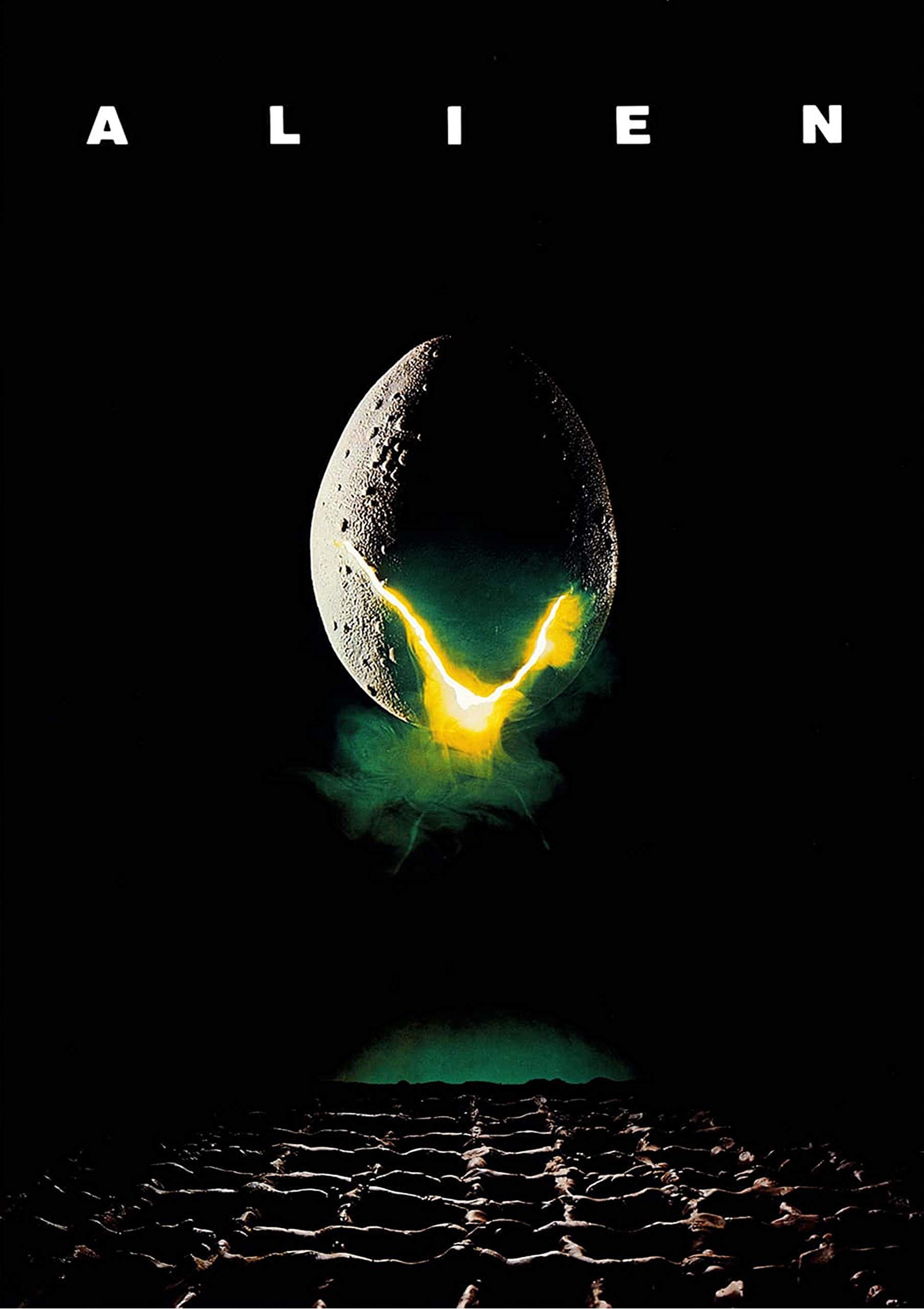
When Alien came up as this week’s ReidsonFilm selection, I assumed every one of us had seen it. Alien is one of those films you feel you’ve absorbed through cultural osmosis – its imagery, its design, the endlessly quoted lines. So it came as a surprise when we realised that, for one of us, this would be a first encounter.
Ridley Scott’s film is undoubtedly a classic both of sci-fi and horror. Released at the end of the 1970s it’s also arguably the last of the great paranoid thrillers. Like The Conversation, The Parallax View, and Capricorn One – it belongs to that cultural moment when the conspiracy is real, and the establishment really is out to get you.
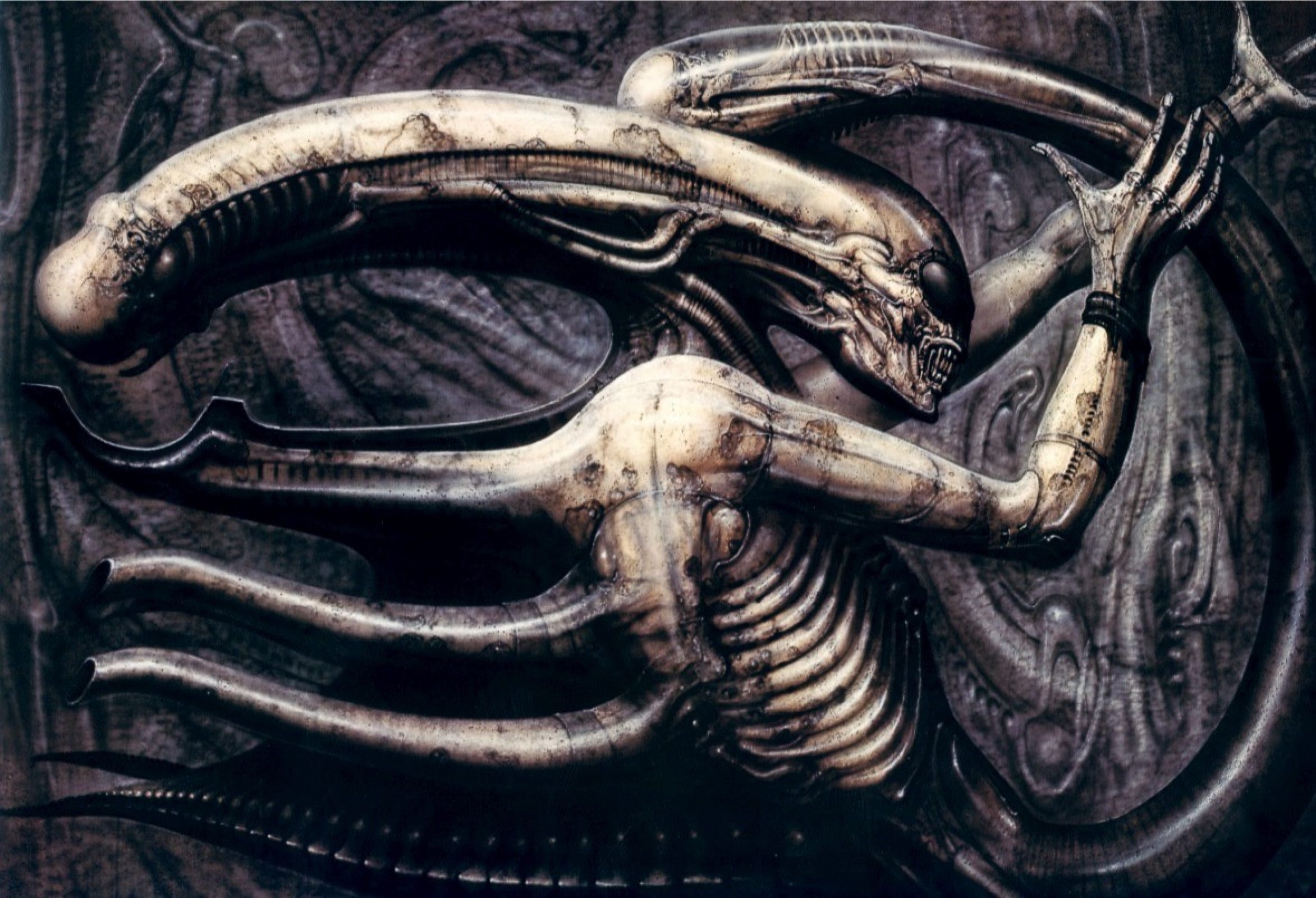
Alien was also a reaction to both 2001: A Space Odyssey and Star Wars. We don’t have the pristine white geometry and serene, gliding movement of Kubrick’s future, and unlike Star Wars there are no sword-wielding heroes out to save the galaxy. Branded with an X certificate at its premiere, this was no family film. I sometimes ponder an alternative timeline in which H.R. Giger’s phallic, biomechanical monster was named ‘E.T.’ and three years later Steven Spielberg comes up with a squat, gentle, blue-eyed creature with a glowing fingertip called Alien. Which one would be the true horror film?
Star Wars begins with a prologue that tells us the story we are watching happened a long time ago in a galaxy far, far away. We are then hit with laser-firing Star Destroyers. Compare that with Alien. It’s 2122 and a beaten-up mining ship, the Nostromo, lumbers across the screen carrying 20 million tons of mineral ore and a crew of just seven. Ridley Scott takes his time here: the camera stealthily explores the long, dark, lugubrious passageways of the ship. The style is industrial brutalism, which makes sense. When the crew are unexpectedly woken from hypersleep by Mother, the Nostromo’s computer, it becomes clear that they are not spacefaring adventurers, but more akin to contracted factory workers about to start a shift. We learn their names and their jobs but no one gets a backstory – none of these people are on a spiritual or psychological journey. Even Captain Dallas (Tom Skerritt) is just an ordinary Joe. It’s a breakfast of cigarettes, coffee, and cereal.
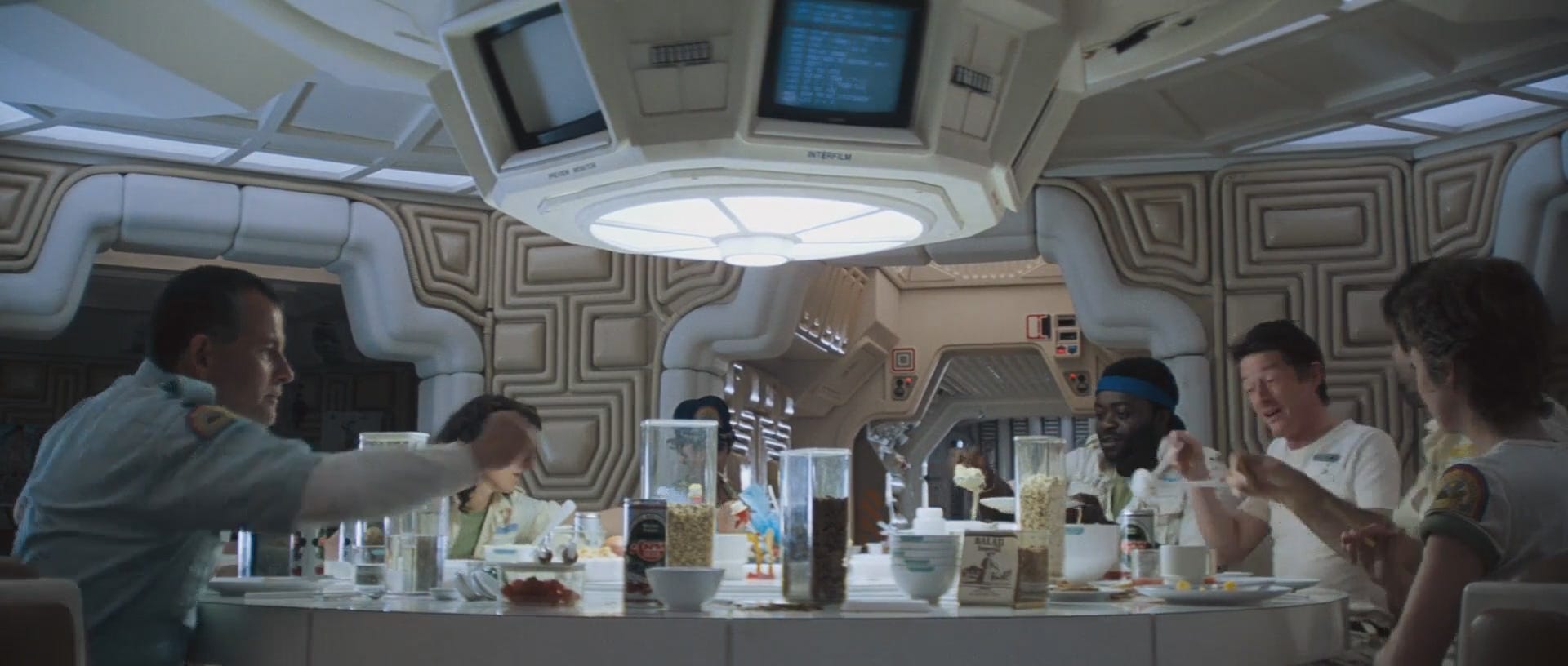
There are indicators of the trouble ahead, notably when Kane, the Executive Officer (John Hurt), groggily complains, “I feel dead”, but that remark gets lost as an argument breaks out about pay:
Parker (Yaphet Kotto): Before we dock, I think we ought to discuss the bonus situation.
Ripley (Sigourney Weaver): You get what you’re contracted for. Like everyone else.
The Nostromo has been rerouted to investigate a signal and recover something from a planet, LV426. But was the alien a new discovery or did the ship’s owners, The Company, already know what lay there? After all, what would explain Special Order 937 – Priority One:
Ensure return of the Organism for analysis.
All other considerations secondary
Crew expendable
The crew are indeed expendable – as we can see, they have no real autonomy. The Company is a classic representation of monopoly capital, exploiting its workforce with the alien serving as the uber-commodity. As the android Ash (Ian Holm) observes, the creature is a perfect organism:
A survivor… unclouded by conscience, remorse or delusions of morality.
And, as Karl Marx tells us, capitalism is inherently unstable and eventually the product will come back and bite you… literally in this case. There are, of course, myriad readings of Alien, and a Marxist take is just one of them. Feminist, psychoanalytic, and many others are available. The film serves as a Rorschach projection, reflecting contemporary anxieties. The creature’s corrosive, acidic blood became an easy metaphor when the HIV/AIDS epidemic erupted only a few years later.
But symbolism and allegory are not what make Alien a classic. As soon as Kane bends over to examine the incubating eggs and one of them explodes into his face, the film takes you on a thrill ride which sets the standard for cosmic horror. This alien, with its smooth proboscis-like skull, and telescoping set of razor jaws is a very different creature from the humanoid aliens we had seen on screen before. And, at the climax of the infamous, erm…stomach-churning scene where the newly gestated creature makes its grand entrance, then dashes off screen, you know it will return, but when it does come back it will be bigger and less friendly.
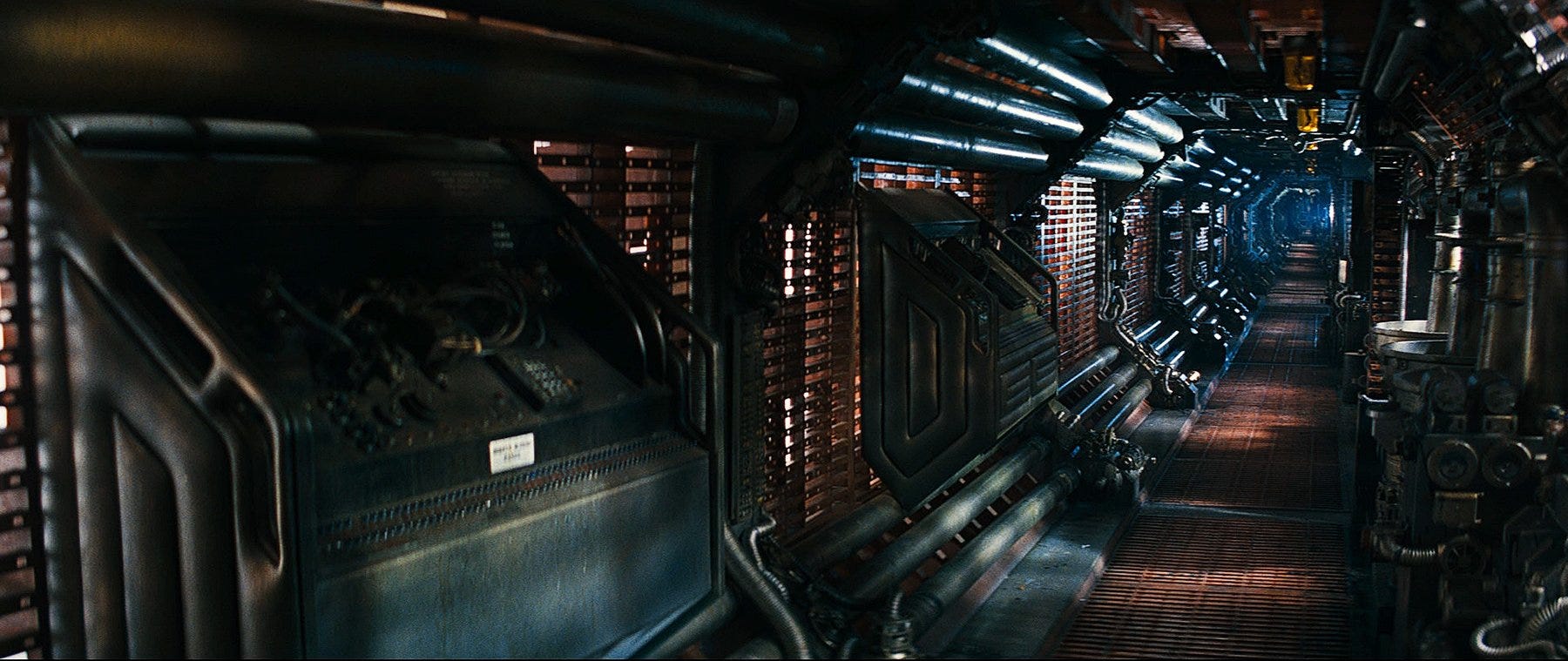
The production design and cinematography combine to give Alien a look that endures. The camera lingers in long, slow tracking shots across the labyrinthine corridors of the ship, deepening the sense of claustrophobia. Harsh fluorescent lights contrast vividly with the pockets of darkness in which the alien resides. The narrow frames make every steam-filled corridor feel like a trap waiting to spring, the tension heightened by an industrial hum. As the alien matures, the tracking shots occasionally shift to its point-of-view, amplifying its menacing presence.
Amid the cosmic dread, Scott injects a Cronenberg-style body horror, perhaps no more disturbingly than in Ash’s demise: His android physiology, with its milky fluid and fibrous tendons, is neither fully mechanical nor convincingly biological. Instead it occupies the uncanny realm of biomechanical flesh – a grotesque union of organic matter and technology that twitches and bleeds.
By the time the alien reveals itself fully, it appears to have its own ideas, perhaps even a personality, its movements almost languid. Is it really playing hide and seek?
Why is Alien just chillin in the shuttle at the end? – N
With all that happened aboard the Nostromo, it is easy to forget the crew’s arrival on LV426 and the discovery of another new species, fossilised, destroyed by the alien.
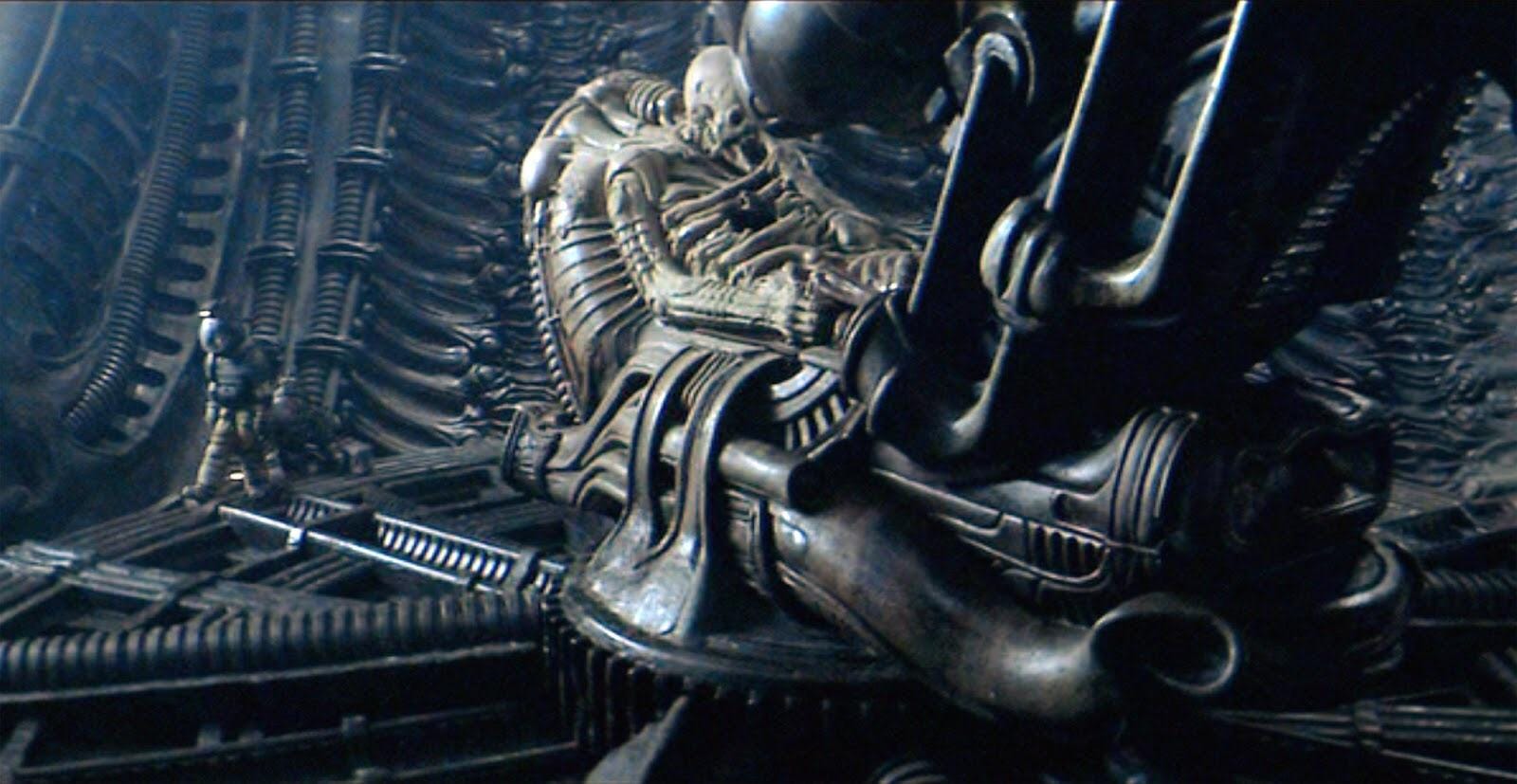
An alien life form – it looks like it’s been dead for a long time.
His ribs are bent outward, like he exploded from inside.
Humanity is not really at the centre of this story but a mere witness, the latest host. Alien underscores the fragility of human life in the shadow of forces far beyond our control, weaving in anxieties about corporate ambition and the dangers of unchecked technology. It is this collision of cosmic indifference and human vulnerability that leaves the audience truly unsettled – an idea that is not perhaps as alien to the human species as it was, once upon a time.
Reids’ Results (out of 100)
C - 80
T - 85
N - 87
S - 85
Thank you for reading Reids on Film. If you enjoyed our review please share with a friend and do leave a comment.
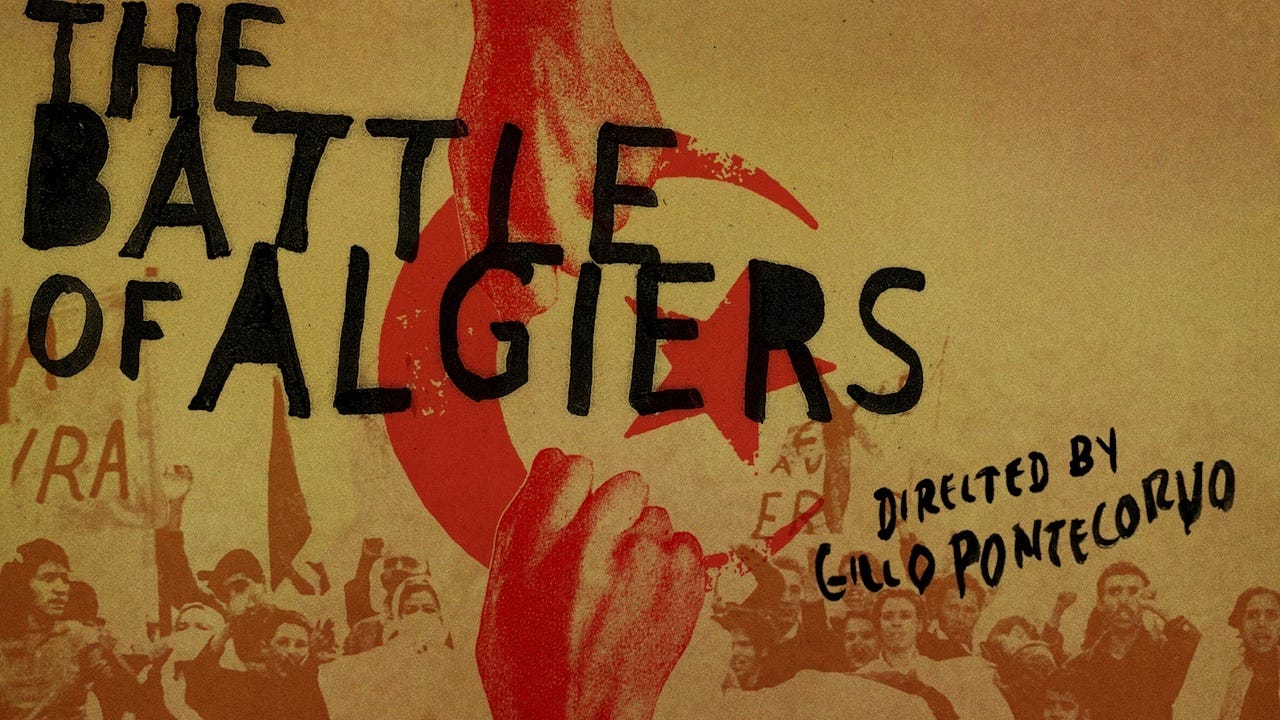
Coming next to ReidsonFilm… The Battle of Algiers(1966)
Excellent analysis! I sincerely enjoyed this. One of my all time favorites — I welcome any and all analysis. There's so much to mine even now from this undisputed classic.
Great write-up. I watched the whole series a while back (and then, more recently, the newer stuff). Here's my ranking:
1. Alien Earth
=2. Alien
=2. Aliens
4. Prometheus
5. Alien Romulus
6. Alien v Predator
7. Alien Covenant
8. Alien Resurrection
9. Alien 3
…
Unrankably bad: Alien v Predator Requiem